“The people spoke against God and against Moses, “Why have you brought us up out of Egypt to die in the wilderness? For there is no food and no water, and we detest this miserable food.” Then the LORD sent poisonous serpents among the people, and they bit the people, so that many Israelites died. The people came to Moses and said, “We have sinned by speaking against the LORD and against you; pray to the LORD to take away the serpents from us.” So Moses prayed for the people. And the LORD said to Moses, “Make a poisonous serpent, and set it on a pole; and everyone who is bitten shall look at it and live.” So Moses made a serpent of bronze, and put it upon a pole; and whenever a serpent bit someone, that person would look at the serpent of bronze and live.” – Numbers 21:5-9
This scripture does not provide assurance of a God who is loving or compassionate when we are wandering in the wilderness, destitute and hopeless. Here, God appears to be angry, unsympathetic, vindictive and even manipulative. Is this truly the God we follow? A God who sends us into the desert until we find ourselves lost, our tongues dried and cracked from the manna and then ultimately killed as God sends poisonous snakes upon us as we cry out in pain?
This certainly has been the message many of us have been told and how we may have interpreted Jesus’ death, believing that God created a formula where God sent down a son so that he could be killed as a way of paying for our complaining. But, in reality, it has been humans that have put this formula together, where one plus one equals two, where complaining and sin equals death. We have been told that this is the case with the serpent and, therefore, this is the case with the cross.
But if this is truly what we believe, who would want to follow this God? Who would want to live in fear and in shame every time they weren’t living in gratitude? Who would want to be scared through death? And what type of Creator would create a formula to justify salvation?
But when we read our scripture, we must remember that mythology and fact were never separate entities in the way that we separate them now. And so I would like us to explore the mythical connotations to this story. A story that, I believe, has more meaning than just a salvific formula. Indeed, this story has to be remembered in relation to what we already know about serpents in the Bible.
It leads us to remember the Garden of Eden, with God sharing the Law of the Land to Adam so that he and Eve would not eat from the Tree of Good and Evil. For if they did, they would die. The serpent in this story encourages them to anyway and we have often related serpents ever since as the harbourer of death. An image maybe reinforced for us in Australia, who have more reason than most to believe this every time we go to the bush.
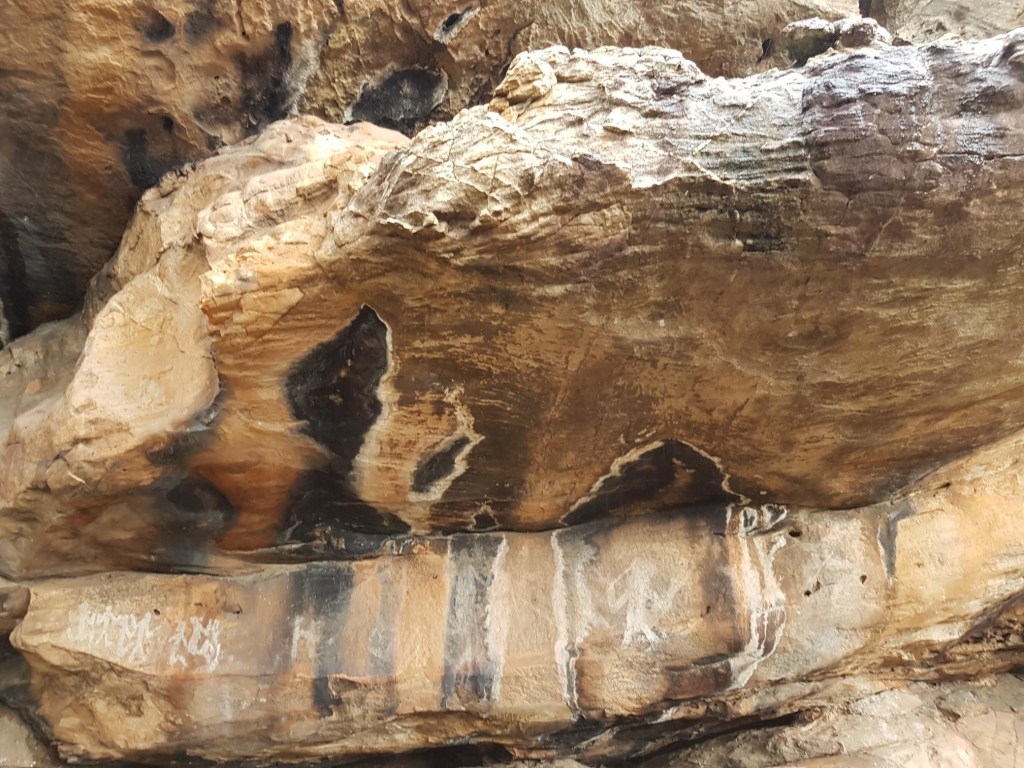
But as Australians, we are also live on Land infused with mythology of the serpent. And part of the Kullilla mythology in Queensland includes the character of the rainbow serpent who facilitated the birthing of rivers, trees, animals and humans on earth with the caveat that those who follow the laws of the land would be given human form. Those who broke the law, however, became stone.
And when we look to the Vedic societies in India, we find spiritual philosophies that believed that each individual possessed a divine energy, a serpent, at the base of the spine. This energy was thought to be the law of creation and it is up to us to “uncoil the serpent,” along our spine so that we might come into union with the divine.
In all these mythologies, a central theme emerges: life arises when we follow The Law of God. In our Aboriginal Australian myth, we have the choice to listen to The Law of the Land and live or walk away from it and become stone. In our Vedic mythology, we have the opportunity to listen to The Law of our Bodies, to watch our breath as it moves and journeys up and down the spine, so that we might live fully. And our Genesis story reminds us that when we follow the Law of God, we, too, will find life.
So I wonder if Numbers 21 is inviting us into something far more profound than a literal reading of our scripture? Perhaps the serpent has always been a reminder for us to listen to The Law of God that leads to life. A sign for us too, this Lenten season, to look towards the serpent, in all our fear of death, and yet, find life.

 by Rev Alisha
Leave a comment